
A Guide to the Most Venomous Spiders and Their Risks
When you’re trying to maintain a pest-free home, you’ll want to keep all bugs out of the house, including spiders. Still, it’s important to note that most spiders are harmless, and can even be beneficial, with a single spider eating up to 2,000 insects per year. Spiders are important for the eco-system, but there are a few species that can pose health risks to humans. Here, we’ll take a closer look at spiders, so you can determine whether the spiders you’re encountering are spiders you need to avoid.
Are There Venomous Spiders in the US?
Asking if spiders are venomous is a bit of a trick question. Most of the spiders in the US are venomous, but only a few have venom that is medically noteworthy for humans. Spiders use their venom to incapacitate their prey, not people, and most of the time they avoid contact with humans. However, there are a few venomous species with bites that can cause pain, swelling, and other unpleasant effects on a person.
Most Venomous Spiders in the United States
The two most venomous spiders in the US are the brown recluse and the black widow.
- Brown Recluse: These spiders are tan to dark brown, and have a violin-shaped marking on their backs. They’re only about a quarter to a half inch long, and they like to hide in dark places like closets, woodpiles, and basements. Brown recluse spiders are generally found in the central and southern states, and they’re not aggressive, typically only biting when they’re pressed against skin. The bites are medically significant, though. While they rarely cause fatalities, they can cause redness, swelling, blistering, and even deep skin necrosis, in some cases.
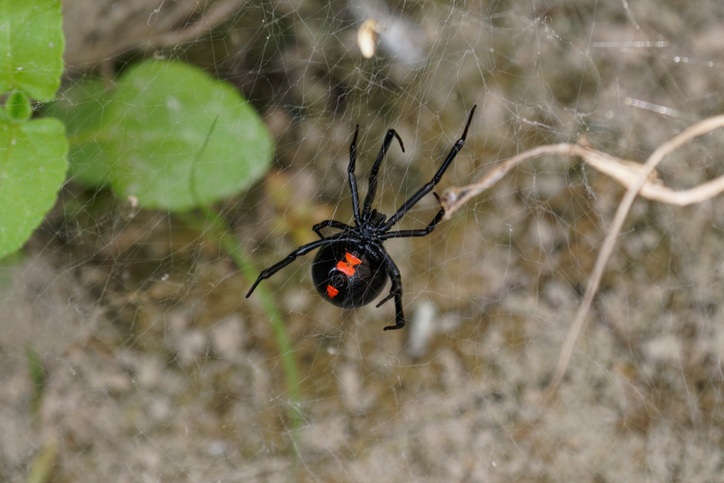
- Black Widow: Perhaps the most famous venomous spider in the US, black widow spiders have a glossy black body. When mature, females have a red or orange hourglass marking on the underneath side of their abdomen. Measuring one quarter to two fifths of an inch long, they have long legs that reach about one and a half inches. They like to live in dry, sheltered locations like garages, sheds, or woodpiles, and they bite defensively, not aggressively. A black widow bite causes sharp pain immediately, and is highly venomous. Other symptoms include stinging, muscle cramps, abdominal pain, sweating, and nausea. Fortunately, fatalities are rare with treatment. Black widows are located throughout the US, primarily in the south and west.
What is the Deadliest Spider in the World?
This distinction goes to the Sydney funnel web spider, which is native to Australia. Shiny and dark brown to black, this spider has venom that contains atracotoxin, a neurotoxin, which affects the nervous system. The venom is extremely potent, and can cause symptoms like muscle spasms, severe pain, and difficulty breathing. These spiders live in moist areas, like under rocks, and create silk trip lines near their burrows.
How to Identify Venomous Spiders
Some spiders look scary, but they’re not dangerous. Wolf spiders, for example, are large, fast, and hairy looking, with big fangs and long legs. They can bite you if you bother them, but the bite is about the same as a bee sting. The brown widow is another one that can deliver a painful bite that isn’t dangerous. Brown widows are related to black widows, and have an orange or yellow hourglass marking on their otherwise tan bodies. Yellow sac spiders will bite, but their bites just cause red bumps and a mild skin reaction. These spiders are small and pale, and hang out on walls and ceilings or hide in curtains. Brown recluse spiders are dark brown, with long legs, and a violin-shaped marking on their backs. They have six eyes instead of eight and build tubes irregular webs for shelter, but don’t use webs for hunting. Black widow spiders, by contrast, hunt with webs built in dark places. They’re easy to identify, with sleek, black bodies and a red hourglass marking.
Dangerous Spiders in Homes: Where Venomous Spiders Hide in Homes
Most venomous spiders don’t want to come into contact with people, so they try to remain hidden. They hide in dark, sheltered places like wood piles, closets, sheds, and garages, and they don’t aggressively bite. However, if they are disturbed, they bite in self-defense.
Signs of a Spider Infestation Your House
The first thing you’re likely to notice if you have a spider infestation is the webs. Webs in the corners, on the ceilings, and in undisturbed parts of the house are a sign that spiders have moved in. You might also notice small, round, white or cream-colored egg sacs, which indicate that the spider population is about to grow. Sometimes, you’ll see the spiders themselves.
What to Do if a Venomous Spider Bites You
Treat spider bites as you would any other bug bite, bee sting, or small wound. Clean the area thoroughly, apply a cold compress, and use hydrocortisone cream to help with itching. If the area swells significantly or feels hot to the touch, seek medical attention promptly.
How to Get Rid of Venomous Spiders — When to Call a Professional for Spider Control
Avoid encountering venomous spiders by being careful, shaking out clothing and shoes before putting them on, and wearing gloves and long pants whenever you need to work somewhere that has dark corners, like sheds or attics. To keep them out of your home, clear away clutter to remove hiding spots, and seal gaps around doors, windows, and vents, so that spiders can’t sneak into the house. If you can’t seem to keep the spiders at bay, call for professional spider control.
For Spider Control in the Bay Area, Call MightyMight Termite Services
MightyMite Termite Services, we offer spider control in the Bay Area. In fact, our highly trained and licensed team has been providing treating homes and businesses in this area since 2013. Our goal is to always provide the right treatment for each unique situation, in order to get rid of infestations and keep them from returning. We have an industry best “no call-back rate,” because our experienced team works hard to solve your pest control problems the first time. Our dedication, experience, and highly trained professional staff make us the leading extermination company in the region, and we work hard to provide our customers with excellent service, utilizing best practices to effectively solve their pest problems. To learn more about our services, contact us through our website.
FAQs About Venomous Spiders
Yes, brown recluse and black widow spiders are venomous.
Texas, California, and Arizona have the most venomous spiders of any states.
Brown recluse spiders have a violin-shaped marking on the back, while black widow spiders have an hourglass marking on the underbelly.
Webs in undisturbed areas, egg sacs, and spider sightings can all clue you into an infestation.
Declutter to remove hiding spaces, and seal cracks where spiders could get into the house. If that isn’t effective, call for professional spider control.